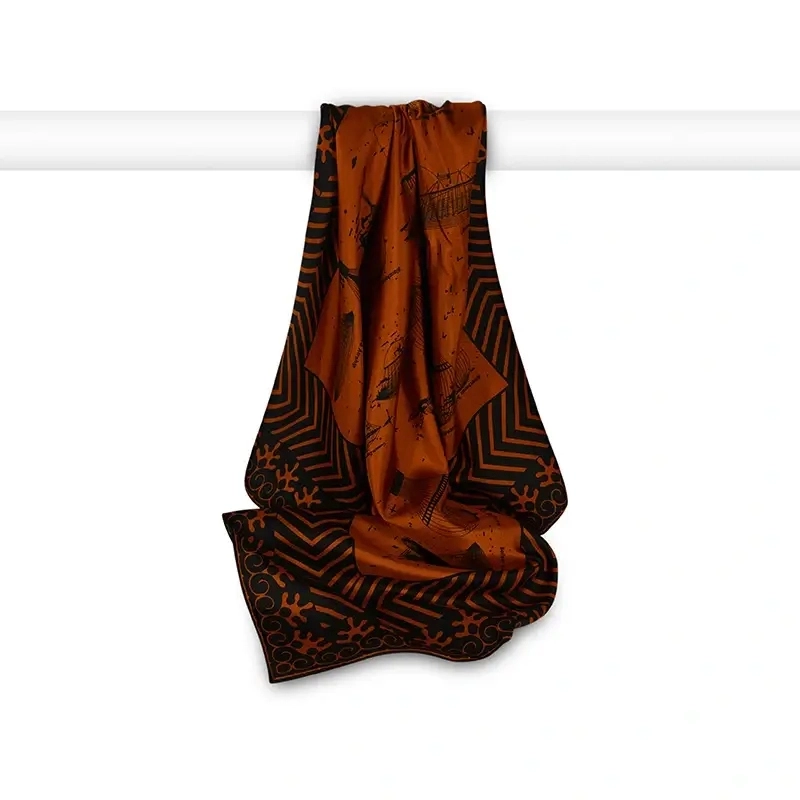
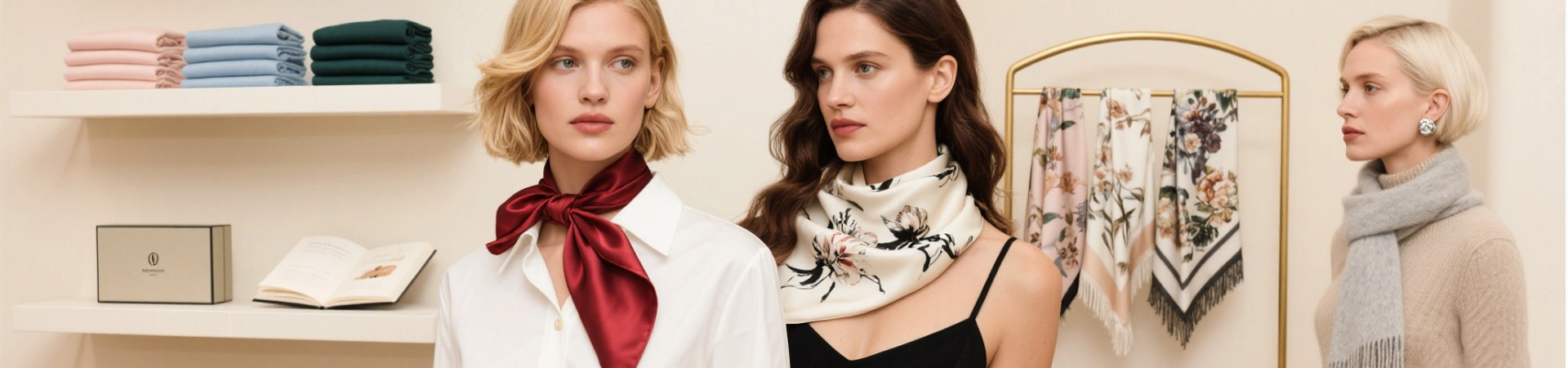
Wholesale Silk Headscarves for Modest Fashion in 2026 Private Label & Sourcing Guide
Modest fashion is becoming a larger, more established part of the global apparel market. Muslim consumer spending on modest fashion reached about US$347 billion in 2024 and is projected to reach US$444 billion by 2029, giving brands more reason to look closely at premium accessories within the category.
For boutiques, fashion labels, and sourcing teams exploring silk headscarf wholesale opportunities, the commercial question goes beyond choosing an attractive print. A successful collection needs the right fabric behavior, coverage, dimensions, artwork placement, branding, and production control.
Textil Xinhe works with international buyers on custom silk scarf projects, including silk headscarves developed around specific designs and brand requirements.
2026 Market Outlook for Silk Headscarves in Modest Fashion
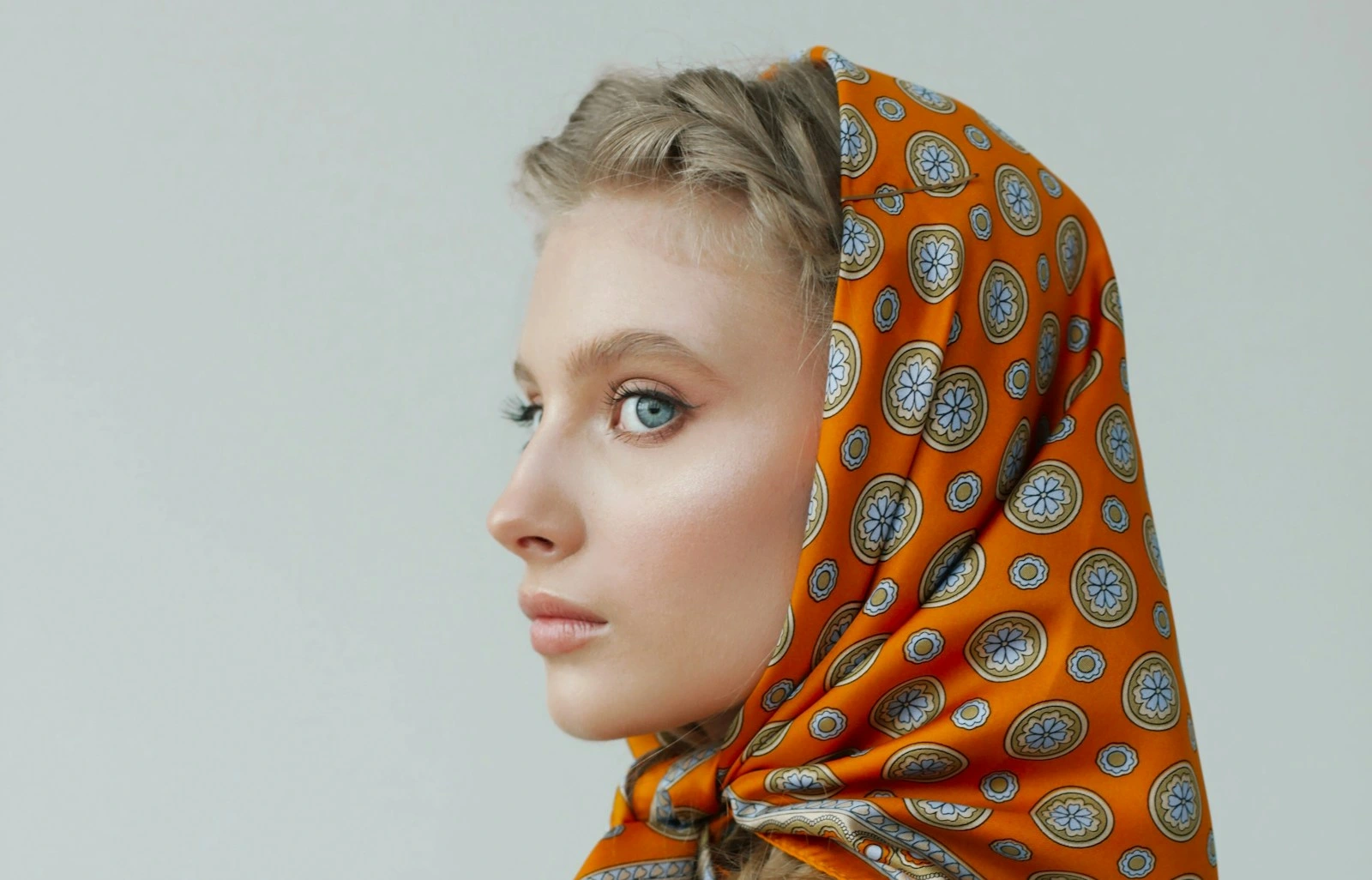
The modest-fashion market is growing at the same time that scarves are receiving renewed attention across mainstream fashion and visual discovery platforms. These two signals should not be treated as the same market, but together they make the scarf category worth watching. For B2B buyers, the opportunity is particularly relevant where a headscarf can combine modest coverage with premium fabric, original artwork, and private label positioning.
Premium Headscarves as a Brand Category
Premium headscarves give brands room to differentiate through material, print, color direction, and finishing rather than competing only on price.
This is especially relevant for boutique collections, occasion wear, gifting, seasonal drops, and modest-fashion brands developing a more distinctive accessory line. A first collection does not necessarily need dozens of SKUs. A focused range of carefully selected colors and one or two signature prints can give buyers clearer market feedback before they expand the assortment.
For projects built specifically around natural silk, Xinhe’s hedvábné šátky can be customized in size and support digital printing, customized logos, and OEM/ODM development. These options allow the product specification to follow the collection concept instead of forcing the design into a fixed stock format.
2026 Scarf Trends and Social Search Signals
Scarves are also gaining wider fashion visibility in 2026. Vogue’s Fall 2026 coverage places the silk scarf firmly back in seasonal styling, while the bandana kerchief has become a particularly visible summer look.
Search behavior on Pinterest points in the same direction. Its Summer 2026 trend data recorded +424% growth for “bandana scarf” and +129% for “Italian silk scarf,” based on activity across the platform’s global user base. These numbers are fashion-discovery signals rather than wholesale hijab demand, but they show that scarf styling is attracting fresh consumer attention.
For sourcing teams, these trends are useful for spotting design direction. The commercial result still depends on the product specification behind the look.
Product Performance Criteria for Modest-Fashion Silk Headscarves
A headscarf is experienced in motion, not laid flat on a sample table. That makes fabric construction, finished size, drape, surface feel, and artwork behavior more important than they may appear during early design discussions. Buyers working on wholesale silk headscarves should evaluate these points together because a change in one specification can affect the way the finished scarf folds and wears.
Fiber Composition and Fabric Construction
For a natural-silk collection, fiber composition should be confirmed before sampling. Silk refers to the fiber, while satin refers to a weave structure; the word “satin” alone does not establish that a scarf is made from silk.
That distinction matters when a product will be marketed as a silk hijab or premium silk headscarf. A buyer should work from a defined fabric specification and physical sample rather than a fabric name alone.
Xinhe has a separate real silk sourcing guide covering fiber composition, fabric weight, weaving structure, and sample review in greater detail.
Coverage, Drape and Wear Stability
For headscarf development, several specifications deserve attention at the same time:
| Procurement check | Practical impact |
| Finished dimensions | Affects coverage and styling range |
| Fabric weight and construction | Influence body, opacity, and drape |
| Surface character | Changes handling and fold stability |
| Artwork placement | Determines what remains visible when worn |
| Edge finish | Affects the final appearance and handling |
There is no universal size that fits every modest-fashion collection. The right dimensions depend on the styling method, target customer, and desired coverage.
Xinhe’s large square silk scarf range includes 100 × 100 cm and 110 × 110 cm formats, alongside smaller square sizes. These can serve as useful development references when a project requires more styling area, while the final dimensions should still be confirmed through sampling.
Private Label Development: Printing, Branding and Sample Approval
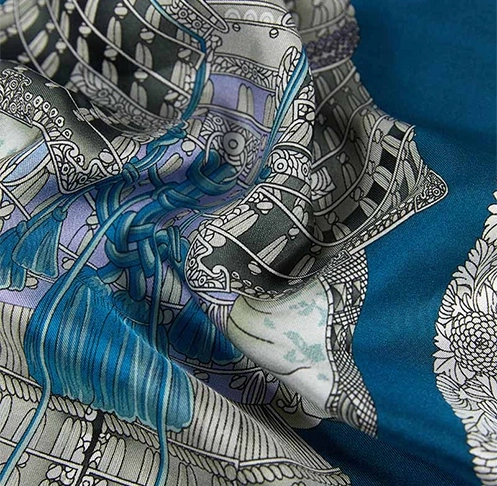
Once fabric and dimensions are defined, the project moves into visible brand details. For private label silk headscarves, print placement, border width, logo position, edge finishing, labels, and packaging should work as one system. This is where buyers can turn a standard scarf format into a recognizable collection, but only if the artwork is reviewed in the same way the end customer will actually wear it.
Designing Artwork for Folded Wear
A square scarf changes dramatically when folded. A central motif may disappear, a border can become the dominant design element, and corner artwork may move to the front of the finished look.
For a custom silk hijab or headscarf collection, it is worth reviewing the artwork in several folded positions before sample approval. Border scale, visible motifs, logo placement, and reverse-side appearance should all be considered before production files are finalized.
Xinhe’s custom silk scarf service supports conventional digital printing and double-sided digital printing, together with several edge-finishing and branding options. For buyers, the point is not to add every available feature, but to match printing, finishing, and branding to the collection brief.
Pre-Production Sample Review
A physical sample should function as a production reference, not simply as a sales sample.
Xinhe Textiles’ published workflow moves from artwork confirmation to physical pre-production sampling, followed by formal production after sample approval. Quality inspection continues through the production process.
During sample review, buyers should check the finished dimensions, fabric feel, print position, color result, edge workmanship, label placement, and overall folded appearance against the approved brief.
In custom scarf development, border placement is one detail worth checking on the physical piece. Even a small layout adjustment can become much more noticeable once a square scarf is folded.
Supplier Qualification for Wholesale Silk Headscarf Programs
Finding a silk headscarf manufacturer or silk headscarf supplier is only the beginning. Procurement teams need to know whether an approved specification can be carried consistently from sampling into bulk production. That becomes even more important when a first collection is expected to lead to repeat colors, new prints, or seasonal replenishment. Supplier evaluation should therefore focus on project execution rather than a long list of general factory capabilities.
Production Capability and Quality Control
Before placing an order, confirm whether the supplier can work from original artwork, customize the required dimensions, provide a pre-production sample, and apply the selected printing and finishing methods to the chosen fabric.
The production discussion should also establish clear approval points. An accepted sample gives both buyer and supplier a practical reference for the bulk order.
For OEM silk scarves and private label headscarves, this creates a cleaner path from development into repeat production because specifications are agreed before manufacturing begins.
RFQ Information for an Accurate Project Review
A useful RFQ gives the supplier enough detail to evaluate the project without unnecessary back-and-forth.
Include:
-
intended scarf size
-
preferred silk or fabric reference
-
artwork file or design direction
-
quantity per design or color
-
printing and edge-finishing requirements
-
logo or private label requirements
-
packaging needs
The delivery destination and target date should also be provided when timing is important.
If the material has not been selected yet, the buyer can begin with the intended wearing experience, target market, and visual direction. Fabric decisions can then be narrowed down during development.
Závěr
The wholesale silk headscarves opportunity in 2026 is supported by two relevant developments: continued growth in modest fashion and renewed consumer attention around scarves as styling accessories.
For B2B buyers, however, trend visibility is only the starting point. A commercially workable headscarf collection still depends on accurate specifications, appropriate dimensions, fabric behavior, artwork placement, sample approval, and reliable production control.
Xinhe Textiles works with brands and sourcing teams developing custom silk scarf projects from artwork and sampling through bulk production. A clear product brief makes it easier to compare options, review samples, and move toward a quotation based on the actual collection requirements.
Často kladené otázky
Q1: What should buyers check when sourcing silk headscarves wholesale?
A: Buyers should confirm fiber composition, finished dimensions, fabric weight, drape, artwork placement, edge finishing, and branding requirements. A physical pre-production sample also provides a clear reference before bulk production.
Q2: What is the difference between a silk hijab and a satin hijab?
A: Silk describes the fiber, while satin describes a weave structure. A satin fabric may be made from silk or other fibers, so buyers developing a natural-silk product should confirm the actual fiber composition.
Q3: Which silk fabric is suitable for a premium headscarf collection?
A: The suitable specification depends on the collection’s target drape, opacity, surface feel, print effect, and styling method. Comparing fabric options and reviewing a physical sample is the most practical way to make the final choice.
Q4: Can custom silk headscarves include private label branding?
A: Yes. Xinhe Textiles supports customized logos and OEM/ODM development for silk headscarves. Broader custom scarf projects can also include labels, hangtags, and packaging based on the project specification.
Q5: Can brands approve a silk headscarf sample before bulk production?
A: Yes. Xinhe Textiles’ production workflow includes physical pre-production sampling, with formal production beginning after sample approval. This gives the buyer a defined stage to confirm the product before bulk manufacturing.