
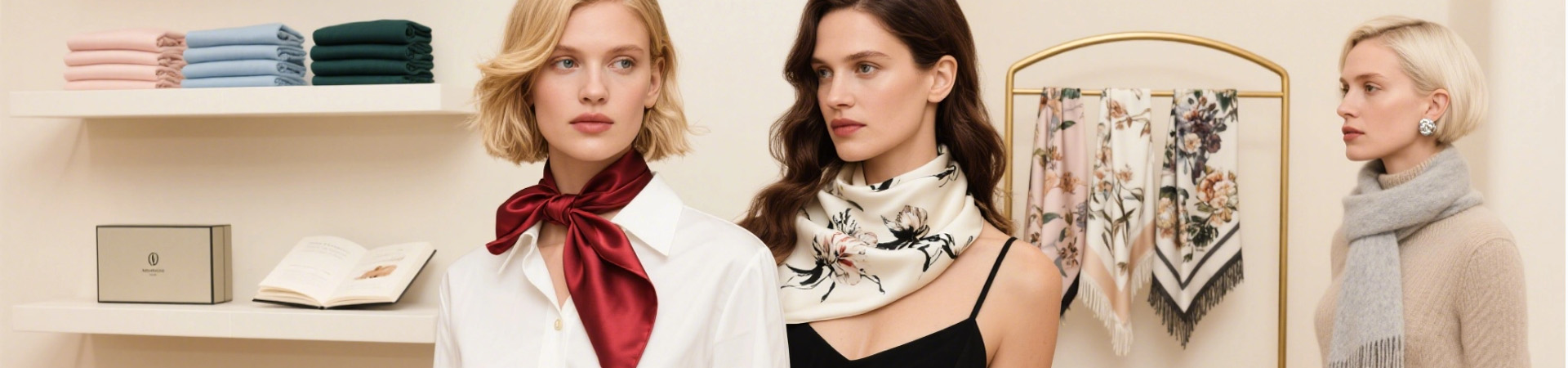
Key Characteristics of Silk Fabric for Apparel Scarves and Textile Sourcing
Tessuto di seta remains one of the most valuable natural textiles for premium apparel, accessories, scarves, and selected interior applications. For commercial buyers, its importance is not limited to a luxury appearance. Silk combines protein fiber chemistry, fine filament structure, moisture management, thermal comfort, dye affinity, and elegant drape. These characteristics affect fabric selection, printing performance, finishing method, production cost, and long-term product positioning. Understanding the main characteristics of silk fabric helps procurement teams, designers, wholesalers, and private label developers select the right fabric type for different end uses.
First, Comfort
Smooth Surface and Low Friction
Silk consists largely of natural protein fibers. The surface of a filament is fine, smooth and soft. When developing clothing and scarves or other items such as linings for clothing, silk fabrics are smooth compared to many other fabrics. As a result, they can be worn comfortably, allow freedom of movement and are agreeably soft to touch. Silk scarves, clothing and high quality accessories such as blouses all drape smoothly and hold their shape without being stiff or bulky.
Lightweight Structure
Silk fabrics can be woven into very light, medium, or dense constructions. Habotai, chiffon, georgette, satin, crepe de chine, twill, and organza deliver different levels of weight, transparency, and body. This range gives product developers flexibility when planning summer scarves, formalwear, evening accessories, luxury linings, or layered fashion pieces.
Second, Moisture Absorption and Release
Natural Moisture Regulation
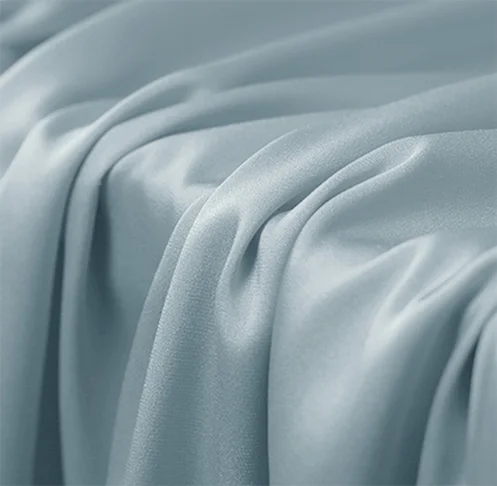
Silk is a protein fiber that contains hydrophilic groups. This means it can absorb and release moisture. Silk fibers are not used in performance sports fabrics, but they offer up a very balanced comfort level for higher end fashion and accessories. To the buyer, moisture absorption is very important because it determines how a fiber will feel, how breathable it is, how it will store on a body and its seasonal comfort level.
Commercial Value for Apparel and Scarves
In warm conditions, silk can help disperse moisture and reduce a clammy surface feel. In cooler conditions, its fine fiber structure can hold a small amount of air and support a soft insulating effect. This balance makes silk suitable for scarves, shirts, blouses, sleepwear, linings, and lightweight wraps. In B2B sourcing, fabric weight, yarn construction, weave density, and finishing method should match the intended season and product category.
Third, Sound Absorption, Dust Absorption, and Heat Resistance
Porous Fiber Structure
Silk is a porous fiber. In terms of its characteristics as a textile, this means that it holds air, is soft yet provides good thermal regulation and breathability. In interior textiles, silk has also been found to provide sound absorption as well as dust absorption, through the fibers’ structure and surface properties. These characteristics are those that would be looked for in premium curtains, wall coverings, decorative textiles and the highest quality of furnishing details.
Heat Resistance and Thermal Behavior
Silk is more heat-resistant than many synthetic fibers, but it is still a delicate natural material that requires controlled processing. High-temperature ironing, aggressive drying, and improper finishing can affect luster, hand feel, shrinkage, and fiber strength. Careful temperature management is important during dyeing, printing fixation, washing, drying, and final pressing.
Fourth, Anti-Ultraviolet Performance
Protein Components and UV Absorption
The fibers in silk contain amino acids that can absorb parts of the ultraviolet radiation. As a result, silk possesses a natural anti-ultraviolet function. However, exposure to UV radiation can also cause silk to become yellow, fade or even degrade. Silk should not be promoted as a sun-protective fabric of technical nature unless it has been tested and certified for this specific use.
Implications for Storage and Display
For wholesalers, retailers and manufacturers of garments made from silk, the UV sensitivity of finished goods such as silk scarves printed on silk or dyed in silk, as well as of unpacked fabrics, affects the way in which such items are stored and displayed. In order to preserve the bright color and the appearance of pale shades as well as of natural white silk and of delicate prints, it is necessary to pack such items properly and to store them dry. In addition, it is necessary to control the amount of light to which they are exposed and to provide shade protection. This is particularly relevant for items such as high quality silk scarves which are part of a luxury collection.
Fifth, Friction and Electrical Properties
Static Behavior
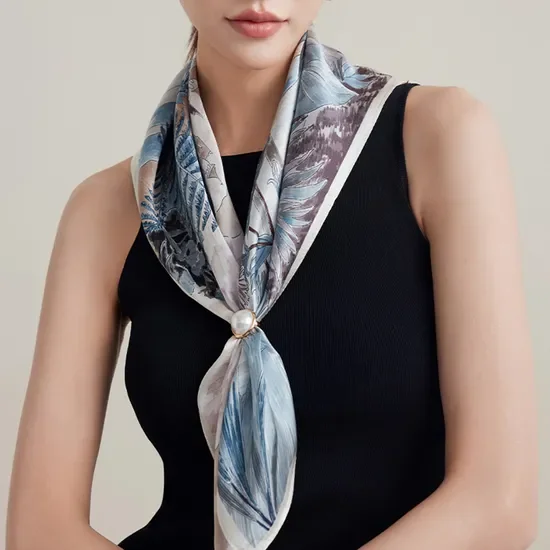
Static is a problem with dry Silk – particularly when it comes into contact with other surfaces and with synthetic clothing. Although this is generally controllable, it can cause problems with cutting and sewing Silk as well as with packaging it. In industry static can be controlled by maintaining the correct humidity and by using antistatic techniques to prevent the fabric to cling together.
Processing Considerations
For very light silk fabrics such as chiffon, georgette, organza or habotai, static could play a role in cutting and constructing them. If the working environment is very dry these fabrics can behave strangely and move about during cutting or construction. The fabrics can be managed with skilled handling, correct spreading, the correct needle for the application and a good edge finish to maintain a clean edge.
Sixth, Luster, Drape, and Visual Depth
Natural Luster
Silk naturally has a lot of shine or luster. The way that silk filaments are put together can give light a soft and layered feel rather than a harsh reflection. This characteristic gives many types of silk fabric, including satin, charmeuse, twill and crepe de chine, a very luxurious look. The luster of silk can also make printed colors look very deep and rich, which is ideal for printed scarves and fashion accessories.
Drape and Fabric Character
Silk fabrics can have completely different draping. Satin and charmeuse are glossy and flowy, crepe de chine is non-shiny and flowy, georgette is grainy and semi-sheer, organza is stiff and structured, habotai is smooth, light and versatile, twill has a diagonal rib and is ideal for scarves because of its body. The character of a weave has to be matched with the character of a product when you are sourcing B2B.
Seventh, Dyeing and Printing Performance
Color Absorption
Silk offers a strong dye affinity and therefore enables extremely solid colors as well as fine print designs. This natural quality of the fabric is particularly suitable for products such as custom scarves, print patches, high-end fashion fabrics as well as limited collections. The strong coloration, however, highly depends on several pre- treatment, dye, print, fixation, washing and finishing-parameters.
Print Clarity and Reverse-Side Effect
For printed silk scarves, color clarity, line definition, edge sharpness, and reverse-side penetration are important quality indicators. Digital printing supports detailed artwork and flexible small-batch development, while other printing methods may suit specific production goals. Strike-off samples should be evaluated before bulk production because artwork scale, fabric weave, and color profiles can change final results.
Eighth, Quality Control for Bulk Silk Fabric Orders
Key Inspection Points
Silk fabrics must be checked for quality beyond the surface and to several criteria.
· Fabric weight and width consistency
· Color matching against approved samples
· Print accuracy and repeat alignment
· Slubs, stains, pulls, creases and uneven dyeing defects.
· Shrinkage, hand feel, and finishing stability
· Hemming or rolled-edge quality for scarves
Why Specification Clarity Matters
When placing a commercial silk order it is essential that you provide full product specifications for the fabrics that will be used in your order. These would include: the type of silk, the momme weight of the silk, the size or cut of the silks, the method of printing that is to be used, the edge finish, the packaging of the printed silks, the tolerance for any irregularities in the finished printed silks, and whether a sample should be provided for approval before the silk is put into mass production. If all of these details are clearly provided then it is possible to check for any errors before the production of the order begins. It will also allow us to provide a better price for the order and enable us to reproduce any excellent quality printed silks time and time again.
FAQ
Which silk fabric is commonly used for scarves?
Some of the most commonly used fabrics for scarves are silk twill, silk satin, silk charmeuse, silk chiffon, silk georgette, silk habotai and silk wool blends. Each of these different fabrics has its own weight, transparency, drape and surface texture.
Is printed silk different from solid color silk?
Printed silk is assessed for the clarity of the artwork, the number of color layers and the print alignment. Solid color silk on the other hand is assessed for even dyeing, for the correct shade and for the surface finish. Both silk fabrics require controlled finishing.
Hangzhou Tessuti Xinhe is a factory-based silk supplier specializing in high-quality silk fabrics and premium silk scarves for international custom production. With a focus on OEM and ODM export orders, the company supports buyers with plain and printed silk fabrics, custom printed scarves, solid color silk scarves, silk-wool scarf projects, sample preparation, design assistance, material selection, and production consultation. For brands, wholesalers, importers, and textile sourcing teams seeking stable quality, flexible customization, and refined silk product solutions, Hangzhou Xinhe Textiles provides professional manufacturing support from fabric selection to finished scarf delivery. Contatta Xinhe Textiles to discuss silk fabric requirements, custom scarf development, sample planning, MOQ, lead time, and bulk order cooperation.

