
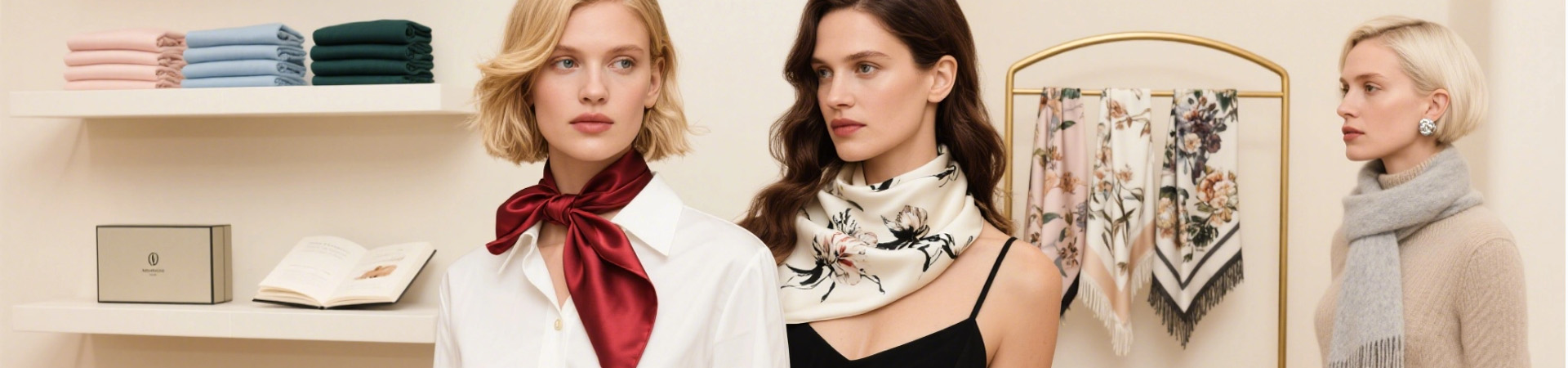
How To Verify Real Silk Fabric When Sourcing Custom Silk Scarves
A silk scarf may look exactly as expected in a digital presentation, but the final product depends heavily on the material selected before production begins. Images can show colors and patterns, but they cannot fully present fabric texture, weight, surface feeling, or how the scarf performs after manufacturing.
For businesses developing custom silk scarves, fabric verification is usually one of the first steps before bulk production. Before approving an order, buyers need to confirm whether the material information is accurate and whether the selected fabric can achieve the expected product result.
The word “silk” alone is not enough for professional sourcing. Fiber composition, fabric specifications, sample evaluation, and production communication all influence the final decision.

For companies working with a silk scarf supplier, confirming these details early helps create a clearer production process and reduces unnecessary adjustments later.
For businesses exploring different silk scarf styles and customization possibilities, Xinhe Textiles provides various custom silk scarf solutions for fashion brands, wholesalers, and private label projects.
Why Silk Fabric Verification Matters Before Custom Orders
Fabric Information Affects The Final Product Result
The selected fabric influences more than the appearance of a scarf.
During product development, material characteristics affect:
-
Hand feel
-
Fabric movement
-
Thickness
-
Surface appearance
-
Customer wearing experience
A fabric that looks similar in online images may perform differently after production. Differences in fiber content, fabric weight, and finishing methods can change how the final scarf feels and looks.
For brands developing private label silk products, these details may influence customer satisfaction and repeat purchasing decisions.
Understanding different silk materials is also useful during sourcing. Xinhe Textiles shares additional information about silk fabric characteristics for textile sourcing to help buyers compare material performance before production.
How To Verify Real Silk Fabric Before Ordering
Confirm Fiber Composition And Technical Details
The first step in checking real silk fabric is reviewing the supplier’s material information.
Important details usually include:
-
Fiber composition
-
Silk type
-
Fabric weight
-
Weaving structure
-
Finishing information
Fiber composition is especially important because surface appearance alone cannot confirm whether a material is genuine silk.
For example, satin describes a weaving structure rather than a fiber source. Satin fabrics may be produced with silk or synthetic fibers, so the actual composition needs to be confirmed separately.
Some buyers also review silk weight measurements such as momme because fabric weight can influence thickness, drape, and the overall feeling of the scarf.
A professional silk scarf manufacturer should be able to provide clear specifications instead of relying only on product images or general descriptions.
Xinhe Textiles offers different silk material options, including fabrics used for customized scarf production.
Review Physical Samples Before Bulk Production
A physical sample remains one of the most effective ways to evaluate silk material.
During sample review, buyers usually check:
-
Fabric softness
-
Surface texture
-
Weight and thickness
-
Natural shine
-
Overall appearance
The purpose of sampling is not only to confirm whether the scarf looks attractive. It also creates a reference for later production.
For international orders, an approved sample helps both the buyer and supplier understand the expected result before manufacturing begins.
This is especially useful for repeat projects because the approved sample can be kept as a reference for future production.
What To Check During Silk Scarf Sample Approval
Compare The Sample With Product Requirements
Before approving a sample, buyers usually compare the product with the original requirements.
Common checking points include:
-
Fabric specifications
-
Scarf dimensions
-
Artwork placement
-
Finishing details
-
Overall product appearance
A sample should represent the production standard that will be followed for bulk manufacturing.
Clear confirmation at this stage helps reduce adjustments after production has started.
Check Supplier Production Records And Quality Control
Material consistency is not only related to fabric selection. Supplier management also affects the final result.
For long-term cooperation, buyers may review whether the supplier maintains records of:
-
Approved samples
-
Material specifications
-
Production requirements
-
Order details
These records are useful when placing repeat orders because they help maintain the same product standard.
A reliable supplier should be able to explain material choices, production limitations, and customization requirements clearly.
Xinhe Textiles follows a customization process that includes design confirmation, sample development, formal production, and quality inspection before delivery.
Common Mistakes When Verifying Silk Fabric
Relying Only On Product Photos
Online images are useful for initial supplier research, but they cannot show every characteristic of silk.
Lighting, photography conditions, and screen differences may affect how a material appears.
A physical sample provides more practical information about:
-
Texture
-
Softness
-
Thickness
-
Surface effect
For this reason, sample checking remains an important part of international textile sourcing.
Comparing Suppliers Only By Price
Different supplier quotations may reflect differences in:
-
Fabric specifications
-
Manufacturing capability
-
Custom requirements
-
Quality control methods
A lower price may not always provide the same material consistency or production stability.
When selecting a silk scarf supplier, many experienced buyers compare the complete cooperation process, including communication, sample quality, and manufacturing support.
Questions To Discuss With A Silk Scarf Supplier Before Ordering
Before confirming cooperation, buyers usually discuss several practical points:
-
What silk materials are available?
-
Can fabric samples be provided?
-
How are material specifications confirmed?
-
What customization options are available?
-
How are repeat orders handled?
-
What are the expected production requirements?
These discussions help both sides understand the project before manufacturing begins.
For businesses ordering custom silk scarves, supplier communication is part of product development rather than a separate step.
Xinhe Textiles supports customized silk scarf projects from material selection to finished products, including different scarf styles and personalized designs.

Choosing A Professional Silk Scarf Manufacturer
What To Evaluate Before Cooperation
Selecting a manufacturing partner involves more than checking product photos.
Important evaluation points include:
-
Fabric knowledge
-
Sample development ability
-
Customization experience
-
Production communication
-
Quality consistency
A supplier with experience in silk scarf manufacturing should be able to support the project from material confirmation to final production.
Xinhe Textiles specializes in silk fabrics and customized silk scarf production, supporting businesses with material selection, product development, and manufacturing services.
Custom Silk Accessories Beyond Scarves
Some brands also develop smaller silk accessories alongside scarf collections.
Products such as custom silk bandanas can use similar customization approaches, including fabric selection, printing options, and finishing choices.
This allows brands to expand their product range while maintaining consistent material standards.
Conclusion
For a new silk scarf project, preparing clear product information before contacting a supplier can make the development process more efficient.
Details such as scarf size, artwork requirements, expected quantity, preferred material, and target market help manufacturers evaluate the project more accurately.
Xinhe Textiles works with brands, wholesalers, and businesses requiring customized silk scarf production. From material discussion and sample confirmation to manufacturing coordination, each stage is managed according to the specific requirements of the project.
Companies preparing a new silk collection can discuss suitable fabric options and production solutions with Xinhe Textiles.
FAQs
Q1: How can real silk fabric be checked before ordering custom silk scarves?
A: The checking process normally starts with reviewing the supplier’s fabric information. Physical samples are then evaluated for texture, weight, appearance, and overall product performance before bulk production.
Q2: Why should a silk fabric sample be approved before placing a bulk order?
A: A sample provides a physical reference for the final product. It allows both sides to confirm fabric characteristics, appearance, finishing details, and production expectations before larger quantities are manufactured.
Q3: Is satin always made from real silk?
A: No. Satin describes a weaving structure, not the fiber itself. Some satin fabrics use silk, while others use synthetic fibers, so the material composition needs to be confirmed.
Q4: What information should be requested from a silk scarf supplier?
A: Buyers usually request fiber composition, fabric specifications, sample availability, customization options, production details, and quality control information before starting cooperation.
Q5: How can repeat silk scarf orders maintain the same quality standard?
A: Maintaining approved samples, material specifications, and production records helps suppliers reproduce consistent results for future orders.

