
The Most Common Sizes for Silk Scarves A Guide to Choosing the Perfect Fit
Silk scarves stand as timeless accessories. They bring together luxury, versatility, and elegance. Their power to change outfits comes mainly from exact dimensions. These measurements affect how the fabric drapes, covers, and offers styling choices. Manufacturers and retailers in the fashion industry need to know standard sizes.
 Square Silk Scarves: The Classic Choice
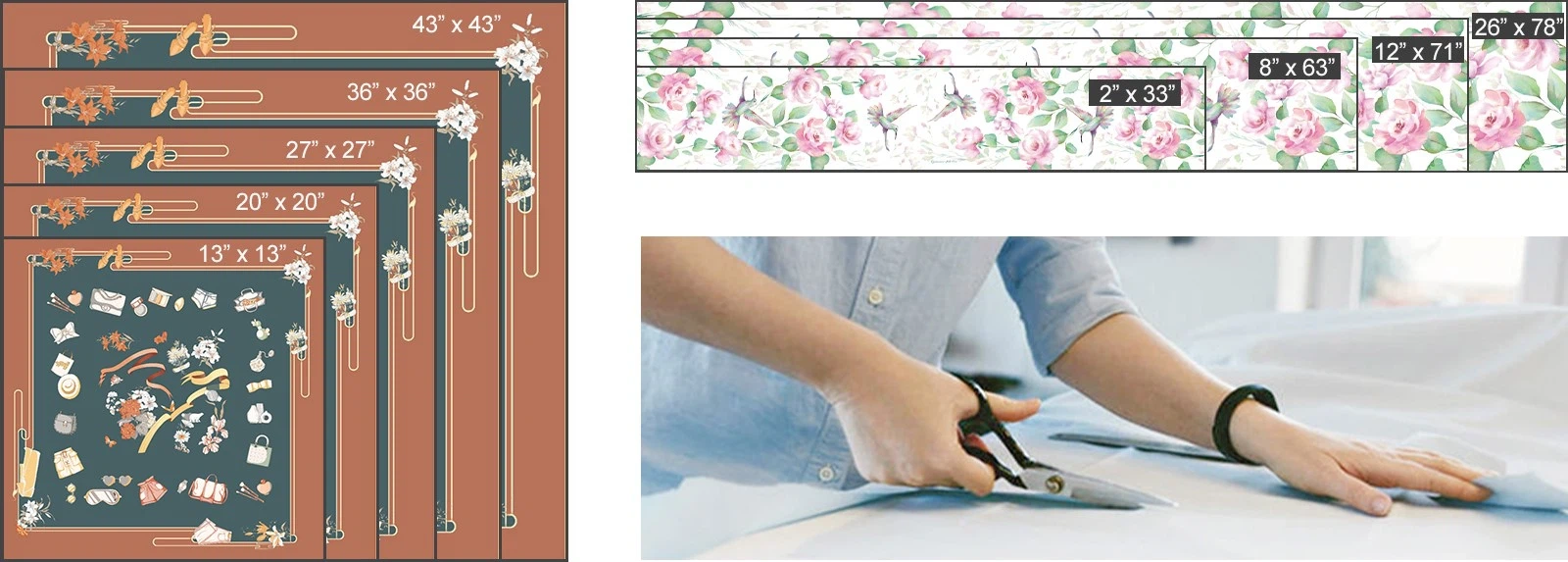
Square formats lead silk scarf production. They offer balanced proportions and work well with many styling methods. These shapes support symmetric tying techniques and create visual harmony in patterns.
90×90 cm (35×35 inches)
The 90×90 cm square serves as the gold standard in silk scarf manufacturing. This dimension gives enough surface area for detailed prints. At the same time, it stays easy to handle for neck wear. People often use it for the French twist. In this style, opposite corners tie at the front or side. It also works for the triangle drape. Makers achieve this by folding the scarf diagonally to create a layered look. Designers frequently choose this size for headscarves. It provides full coverage without too much bulk. When tied to handbags, the size makes balanced accents. These accents match structured bags well. In production, this format allows efficient cutting from standard silk fabric widths. It helps reduce waste during hemming processes.
70×70 cm (27×27 inches)
The 70×70 cm square is a bit more compact. It gives a subtle presence that fits professional or minimalist collections. This size works well as a necktie alternative. Wearers knot it loosely for a refined touch. It also serves as a headband. The headband secures hair and shows subtle patterns at the same time. Wrist wrapping stands as another common use. In this way, the scarf adds color without overwhelming the arm. The smaller scale suits lighter silk weights such as habotai or chiffon. These weights improve flow and comfort. Retailers often place this dimension for transitional seasons. It layers easily under collars or jackets.
45×45 cm (18×18 inches)
Miniature squares in the 45×45 cm range act mainly as pocket squares or accent pieces. When folded neatly, they bring pops of color to blazer pockets or suit jackets. Other styling options include hair ties or small wrist bands. These choices add detail to minimalist outfits. Production of this size favors solid-color or small-scale prints. Larger motifs might look cropped on such a small piece. The compact form supports higher-volume manufacturing runs. It also uses less material per unit.
Rectangular Silk Scarves: The Modern Favorite
Rectangular or oblong scarves bring asymmetry. This feature supports long draping and wrapping techniques. These formats attract contemporary fashion lines. The lines look for versatile layering options.
180×90 cm (71×35 inches)
This large rectangular size performs well as a shawl or wrap. It delivers plenty of coverage for evening events or cooler climates. The length allows creative draping over shoulders or arms. Meanwhile, the width keeps the piece from slipping easily. Manufacturers use this dimension for both solid and printed variants. They often select medium-weight silks like twill or crepe de chine. These silks add structure. In colder seasons, the size doubles as a light blanket scarf during travel. It combines warmth with elegance. Cutting efficiency improves when the pieces align with fabric bolt widths that are common in silk production.
160×50 cm (63×20 inches)
Narrower rectangular scarves that measure about 160×50 cm provide a sleek profile. This profile suits professional and casual ensembles. The long shape encourages simple knotting at the neck or loose draping down the front of garments. This format pairs especially well with tailored blouses or coats. The slim width keeps a polished appearance. Production teams value the balance between material usage and styling versatility. The dimensions fit various hemming techniques without too much selvage waste.
Bandana Silk Scarves
55×55 cm (22×22 inches)
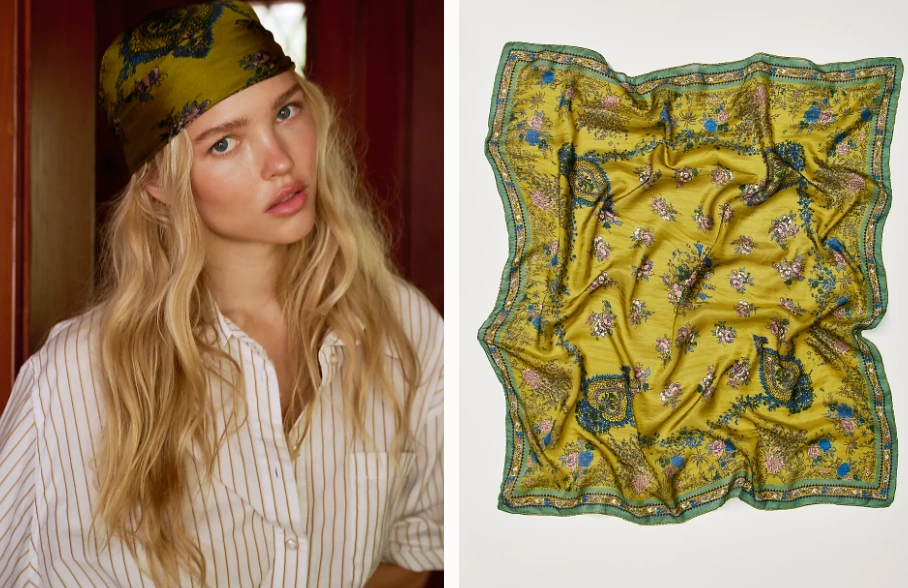
Bandana-style squares in the 55×55 cm range offer compact versatility. They suit casual or playful applications. Wearers commonly tie these as neck bandanas, headscarves, or decorative accents on bag handles. The size supports bold, repeating prints. These prints stay visible even when folded. Lightweight silk variants improve breathability. This makes the format right for warmer weather or active lifestyles. In manufacturing, the smaller scale allows rapid sampling and customization. Lower minimum order quantities become possible for testing new designs.
Oversized Silk Scarves: A Statement Piece
Larger dimensions create dramatic visual impact and functional utility. They expand the role of silk scarves beyond traditional accessories.
120×120 cm (47×47 inches)
Extra-large squares at 120×120 cm allow bold experiments. They function as wraps, sarongs, or even makeshift tops. The bigger surface area shows large-scale prints effectively. This size becomes popular for artistic or seasonal collections. Draping options increase. They range from full shoulder coverage to belt-like cinching at the waist. Heavier silk constructions or blends give the needed drape and stability for these uses.
140×140 cm (55×55 inches)
The largest common format, 140×140 cm, acts as a luxurious shawl or blanket scarf. It works well for travel or formal occasions. This size offers substantial warmth. It still keeps silk’s signature sheen and softness. Production needs careful attention to fabric tension during printing. This prevents distortion across the wide area. Oversized pieces often include finished edges or delicate fringes. These details raise perceived value.
Factors Influencing Silk Scarf Size Selection in Production
Several technical and market-driven elements guide size decisions during development and manufacturing. Fabric characteristics play a key role. Lighter weights, such as silk chiffon or georgette, perform best in larger formats. In these formats, flow and movement improve aesthetics. Denser weaves like satin or twill hold structure in medium or rectangular sizes. They prevent unwanted sagging.
Print techniques also affect sizing. Digital printing on silk needs precise color management and resolution. Larger scarves require higher file quality to keep detail at scale. Hemming methods, including hand-rolled edges or machine stitching, influence final dimensions. They must consider seam allowances during initial cutting.
Market positioning affects scale choices. Luxury lines may prefer oversized or classic 90 cm squares. These emphasize craftsmanship. Accessible collections lean toward versatile medium sizes for broader appeal. Seasonal considerations matter too. Narrower rectangles suit layering in transitional weather. Oversized squares provide coverage in winter lines.
Production Processes and Quality Assurance in Silk Scarf Manufacturing
Efficient manufacturing workflows support consistent size accuracy and quality. Pattern cutting from wide silk bolts needs precise alignment. This keeps square or rectangular integrity after hemming. Digital cutting systems reduce deviations. They ensure uniformity across orders.
Quality control checkpoints happen at multiple stages. Pre-production samples check dimensions, print alignment, and hand feel. During bulk runs, inspections focus on color consistency, seam strength, and absence of defects such as pulled threads or uneven dyeing. Packaging considerations, including acid-free tissue and protective sleeves, protect silk integrity during storage and shipping.
Customization capabilities let brands adapt standard sizes for private label collections. Adjustments in length or width meet specific design visions. They still keep production efficiency through modular cutting templates.
Sustainability Aspects in Silk Scarf Size and Material Choices
Responsible production practices influence size and material decisions more and more. Optimized dimensions cut fabric waste during cutting layouts. Selection of ethically sourced mulberry silk supports traceability from cocoon to finished scarf. Eco-friendly dyes and low-impact printing methods reduce environmental footprint. They still maintain color vibrancy across various sizes.
Manufacturers that adopt energy-efficient facilities and waste-minimization strategies can increase production. They do so without proportional resource increases. This benefits both standard and custom orders.
Xinhe Textiles specializes in supplying high-quality silk fabrics in both plain colors and prints as well as creating high-end and luxurious silk scarves.
Conclusion
Those fashion companies that want to find good partners who could supply them with quality silk scarves and fabric should work with experienced manufacturers. They can give you good customizations, fast delivery, and top-notch products. Xinhe Textiles will assist you in developing your own private label collection and provide you with different types of silk fabrics, such as satin, georgette, chiffon, and habotai. Thanks to minimal orders that may start from the smallest sample of meters of fabric, quick deliveries of strike-offs, and professional designers’ help, the company guarantees you an easy way to create a product line of high quality. Contact Xinhe Textiles today.
FAQ
What is the most versatile silk scarf size for general fashion collections?
The 90×90 cm square offers the broadest styling options. It functions effectively as neckwear, head covering, or bag accent while accommodating detailed prints.
How do rectangular sizes differ in application from square formats?
Rectangular scarves, such as 180×90 cm or 160×50 cm, emphasize elongated draping and wrapping. They make good choices for shawls or layered neck pieces. Squares provide balanced symmetry.
Are smaller sizes like 45×45 cm suitable for production in bulk?
Yes, miniature squares support efficient manufacturing with reduced material use per unit. They work well for accent items or pocket squares in coordinated collections.
What fabric weights perform best with oversized silk scarves?
Medium to heavier constructions, including twill or crepe variants, provide the structure needed for larger dimensions. They help maintain elegant drape without excessive lightness.

